
What Does OSHA Require for Farm Sanitation?
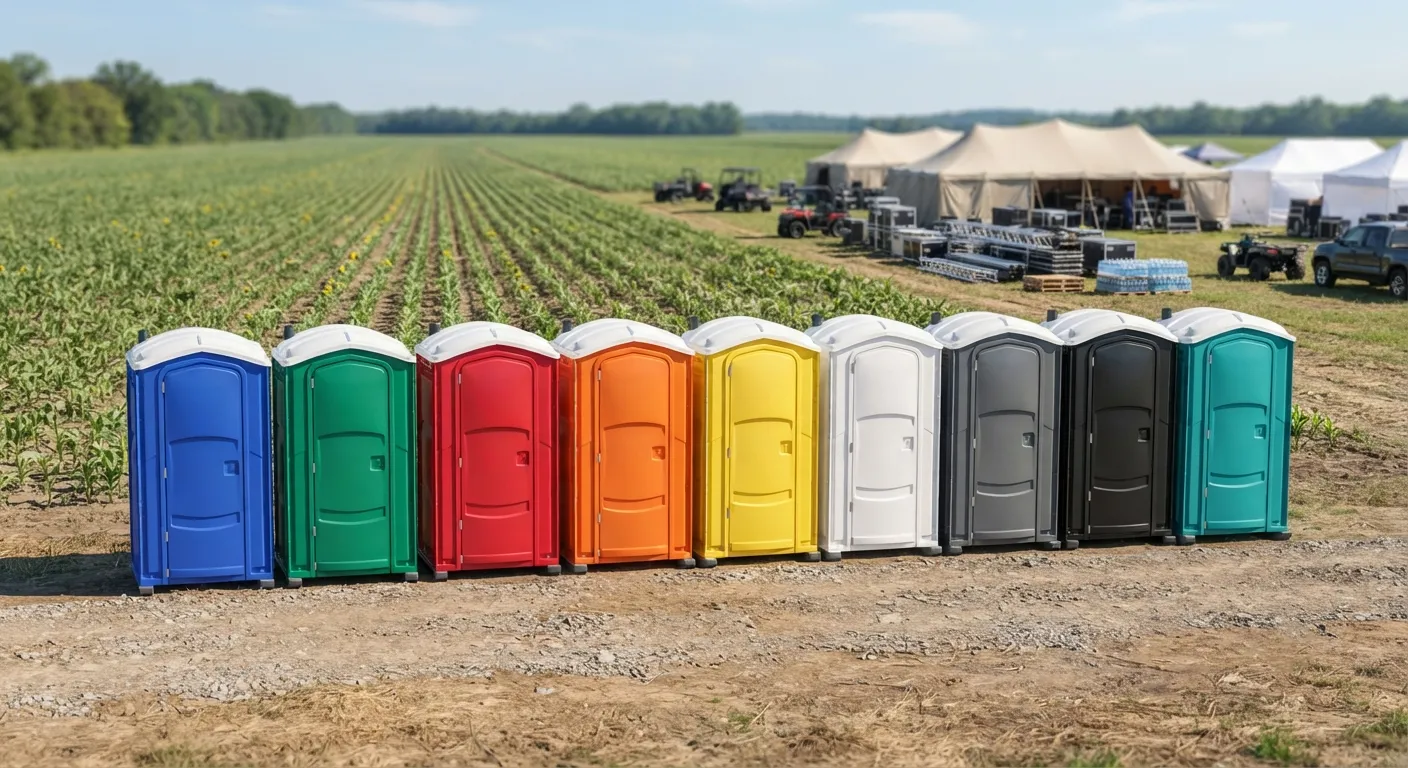
Field sanitation rules are specific, and they are not the same as a construction site. OSHA 1928.110 covers hand-labor operations in agriculture and calls for one toilet facility per 20 employees, plus potable water, all reachable within a quarter mile walk or a five minute walk from where people are working. That is different from OSHA portable toilet requirements written for job sites, which fall under 1926.51(c) instead. A crew of 20 detasselers strung along a field edge outside Cedar Rapids still needs that facility close enough to actually use, not parked at the farm entrance a half mile off. We place standard porta potty rental units at the field access point closest to the crew and move them as work shifts across parcels. For hog confinement sites, dairy operations or grain elevators with a fixed crew, a single well-placed unit near the loading area often covers the ratio, but bigger detasseling and harvest crews need two or three spread across the field. If you are not sure where your operation lands, our how many porta potties do I need page walks through the math, and we will confirm it on site.
Where Do Handwashing Stations Fit on a Farm?
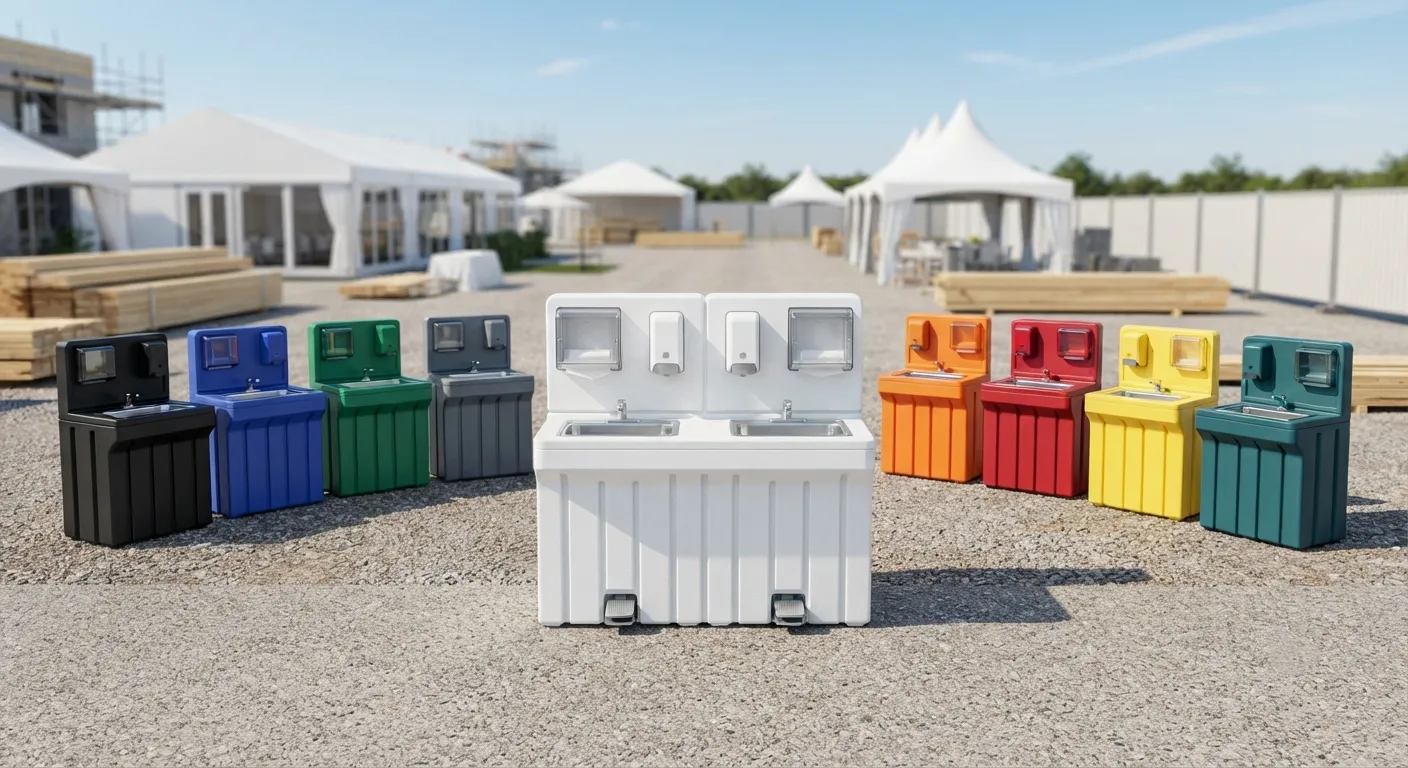
Handwashing stations aren't optional add-ons at a field site, they're part of the sanitation package OSHA expects alongside the toilet. Under 29 CFR 1910.141(d)(2), any handwashing setup needs soap and towels or a hand-drying device, not just sanitizer on a post. That standard is written for general industry, but it is the baseline we build to on every handwashing station rental we deliver, farm or job site. If your crew is mixing or applying pesticides, herbicides or other treatments, OSHA 1926.51(f)(1) requires washing facilities specifically for that exposure, separate from routine field hygiene. We pair a portable sink rental with the toilet unit at most agricultural stops, since crews handling produce or livestock need real handwashing, not a squirt of gel. A hand sanitizer station rental can supplement that setup near equipment or a loading dock, but it does not replace the sink where OSHA 1926.51(a)(1) calls for an adequate supply of potable water at the worksite. We fill and service both together on the same route.
How Often Do Units Get Serviced During Harvest?
Weekly service is the standard baseline, and ANSI/PSAI Z4.3 sets that one-visit-per-week interval for units seeing normal use across a standard work week. Harvest and detasseling season is not normal use. A crew running long days on a hot August field goes through tank capacity faster than an office job site, so we tighten the route to twice a week during peak weeks and scale back once the crew count drops. Each standard unit holds a 60 to 70 gallon tank, and on a 20 person crew that fills faster than most farm operators expect, especially with a full field lunch break happening near the unit. We track crew size and field location for every stop around Cedar Rapids, Hiawatha and Marion, and we adjust the pump schedule instead of running it on autopilot. If your operation runs seasonal only, a monthly porta potty rental covers the whole window without a long-term contract, and you can add or drop units as the crew size shifts. Livestock operations with a fixed farmhand crew usually do fine on the standard weekly cycle, same as our portable toilet rental customers on residential job sites.
Pricing for Farm Sites
| unit | duration | typical price |
|---|---|---|
| standard | day | $150 |
| standard | week | $200 |
| standard | month | $200 |
| delivery_fee | week | $100 |
| service_fee | week | $60 |
Farms south of Cedar Rapids toward Fairfax, 6.4 miles out, and operations north near Hiawatha, 7.4 miles, sit inside our normal delivery zone without an extra trip charge. See our full porta potty rental cost and porta potty rental per day breakdowns if you are comparing a short detasseling contract against a full season lease.
How many units does a 30 person detasseling crew need?
Under OSHA 1928.110's ratio of one facility per 20 workers, a 30 person crew needs two units minimum, placed within a quarter mile walk of wherever the crew is working that day. We usually recommend a third if the field is long and narrow, since walking the whole quarter mile eats into paid time. Check our how many porta potties do I need guide for crew-size math.
Can you service units in a field with no gravel access?
Yes, most farm fields have soft ground, and our route trucks handle it, but tell us about mud, standing water or steep grades before delivery day. We plan the porta potty placement guide around field access, not just crew location, so the truck can actually reach the unit on pump day.
Do you handle winter livestock operations too?
Yes, year-round farm operations near Cedar Rapids get winterized units and adjusted service schedules. Cold weather changes how a tank holds up and how often it needs pumping. Our porta potty in winter page covers the specifics for standing units through an Iowa winter.
What about septic pumping for the farmhouse or milking parlor?
We run septic pumping alongside portable restroom routes for the same properties. A residential tank typically needs pumping every 3 to 5 years depending on tank size and household size, and a dairy operation's grease and wash-water setup may need more frequent attention. Ask about our septic pumping service when you book field units.
Is a handwashing station required if we're not spraying chemicals?
A toilet and potable water are required under OSHA 1928.110 regardless of spraying. The stricter 1926.51(f)(1) washing rule kicks in specifically for paint, coating, herbicide or insecticide application. Most farms want a sink anyway for general hygiene; see handwashing station requirements for the full picture.
Next step
Get a delivery date
Tell us the address, the dates and the headcount. We size the order and confirm the route.